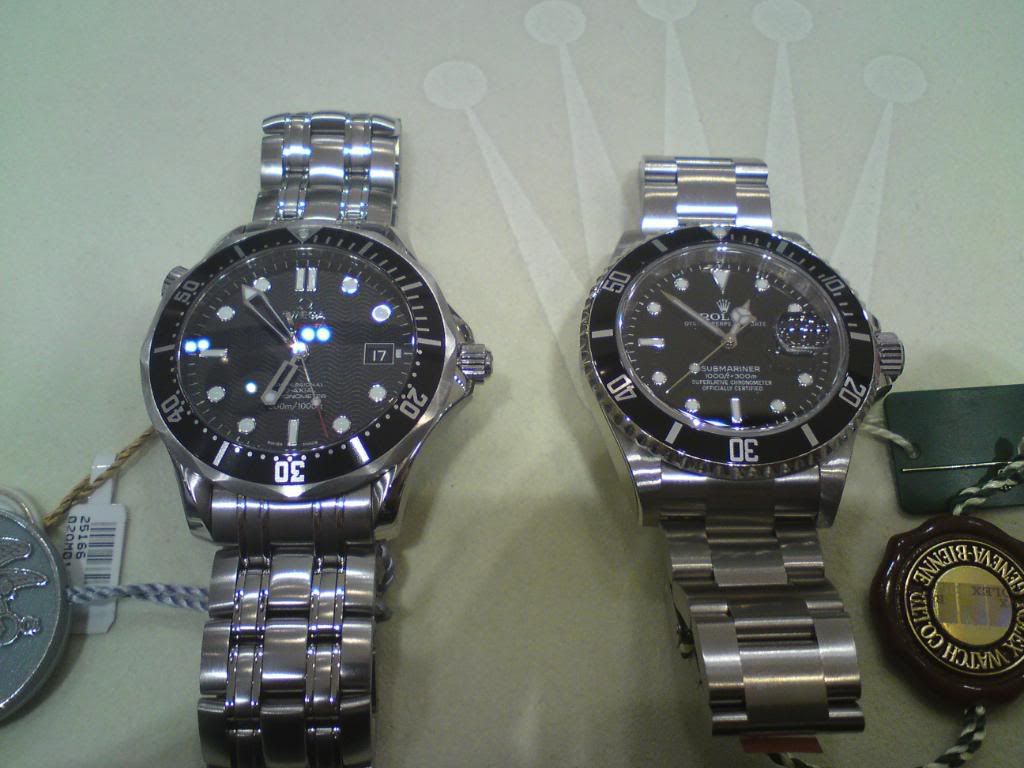
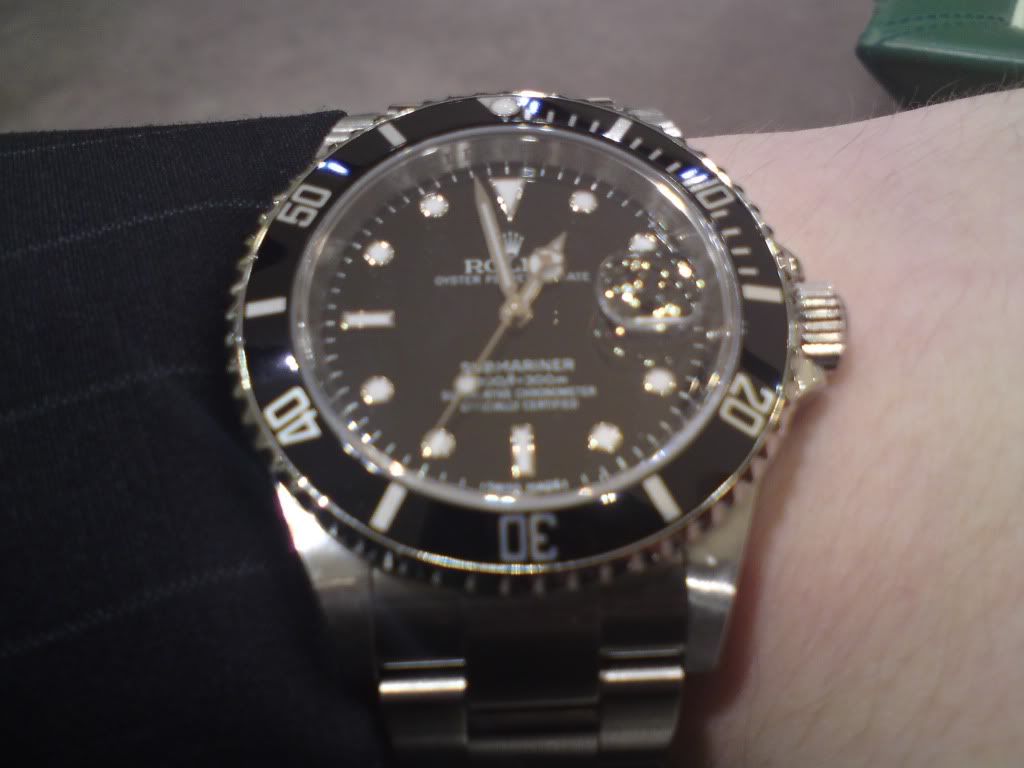
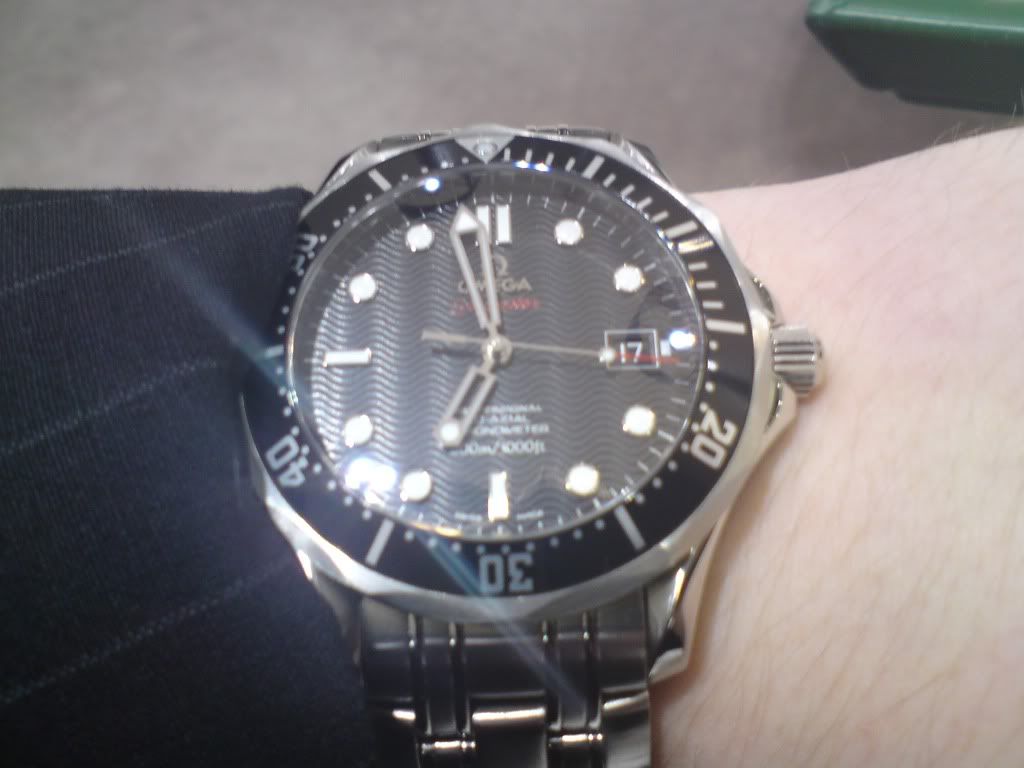
The first of which is a comparison between two icons of the diving watch world: the Rolex Submariner Date and the Omega Seamaster Professional. With the introduction of the black dialled version, as well as Omega's reluctance to push prices up as steeply as Rolex, the Seamaster is looking like a better and better buy every day. Conversely, despite coming to the end of its operational life, the Submariner continues to be one of the most popular models in the Rolex range, and has amassed a serious fanbase since its original inception in 1953. The models I will be reviewing are the Submariner 16610, and the Seamaster 212.30.41.20.01.002.
Technical Specifications (Sub vs. SMP)
Case Diameter: 40mm - 41mm
Cal. Number: Rolex 3135 - Omega 2500
Automatic?: Yes - Yes
BPH: 28.8k - 25.2k
Power Reserve: ~40 hours - 48 hours
COSC Certified?: Yes - Yes
Material: 904L Steel - 316L Steel
Waterproofing: 300m - 300m
Screw-down crown?: Yes - Yes
Helium Escape Valve?: No - Yes
Crystal: Sapphire - Sapphire
Anti-reflective coating?: No - Inside only
Luminous Material: Green Super-Luminova - Blue Super-Luminova
Unidirectional Rotating Bezel?: Yes - Yes
Price (UK RRP): £3890 - £1860
The Aesthetics
With the introduction of the black dial on the SMP, there is very little to distinguish between the two at a glance, at least with an untrained eye. Indeed, the basic dial layout of dots-and-dashes hour markers is the classic dive watch look - simple, practical, legible. The biggest difference on the dial itself is the finish - the Submariner goes for a gloss finish, whilst the Seamaster adopts a wave finish, designed to reduce glare whilst diving.
The other large cosmetic difference on the face of the watch would be the cyclops magnifying bubble on the Sub - although some really don't like this feature, I, for one, think it's an essential part of the Rolex look, and handy for looking at the date quickly. The date window on the SMP is pretty small, and can be difficult to read at a glance. As a general rule, the Submariner is a lot shinier than the Seamaster, owing to the gloss finish and lack of AR coating, and whilst this makes for a "dressier" look, it could be a potential problem for legibility in bright light.
As such, there is little to separate the watches in terms of aesthetics, and it really boils down to personal preference. For me, the Rolex just edges it in this respect.
The Bracelet
It's my personal view that the bracelet is just as important as the watch head when considering a watch - after all, the bracelet and clasp determines the "feel" of the watch, and dictates how comfortable it is to wear every day. Certainly, there is a large difference between the two watches in regards to this.
The Submariner uses a brushed-finish Oyster bracelet, with solid end links, but hollow centre links, whilst the SMP uses an exclusive bracelet with polished higlights and solid links throughout. The first thing that I noticed with the Submariner bracelet is just how light the bracelet felt - a positive for someone who wants a dive-watch without the typical dive-watch heft - but also how rattly it felt. One has to bear in mind that the 16610 was launched 20 years ago, and it really is beginning to feel like its age. Submariner enthusiasts will point out that it's a strong and reliable bracelet, ready to take the abuses of every day life, and I completely agree. However, when you put it against one of the new-style Rolex bracelets, such as the one on the GMT IIc, the Submariner's band just feels cheap.
The Seamaster's bracelet, on the other hand, gives the wearer a feeling of confidence. It's substantial without being overbearing, and sits nicely on the wrist. It also looks a little dressier than the Rolex's, with the polished sections of the links just giving it a little bit of contrast.
There's a similar story with the clasps - the best word to describe the Submariner's clasp is outdated. It still uses the folded-metal clasp, which is wafer thin, and, to be quite frank, would feel wrong on a £500 watch, let alone a near-£4000 watch. Again, it can be argued that it's served it's purpose for a long time, and I won't deny that, but placed against the brilliant Glidelock clasp (see the Deepsea Review if you haven't come across it yet), it feels like an ancient relic:
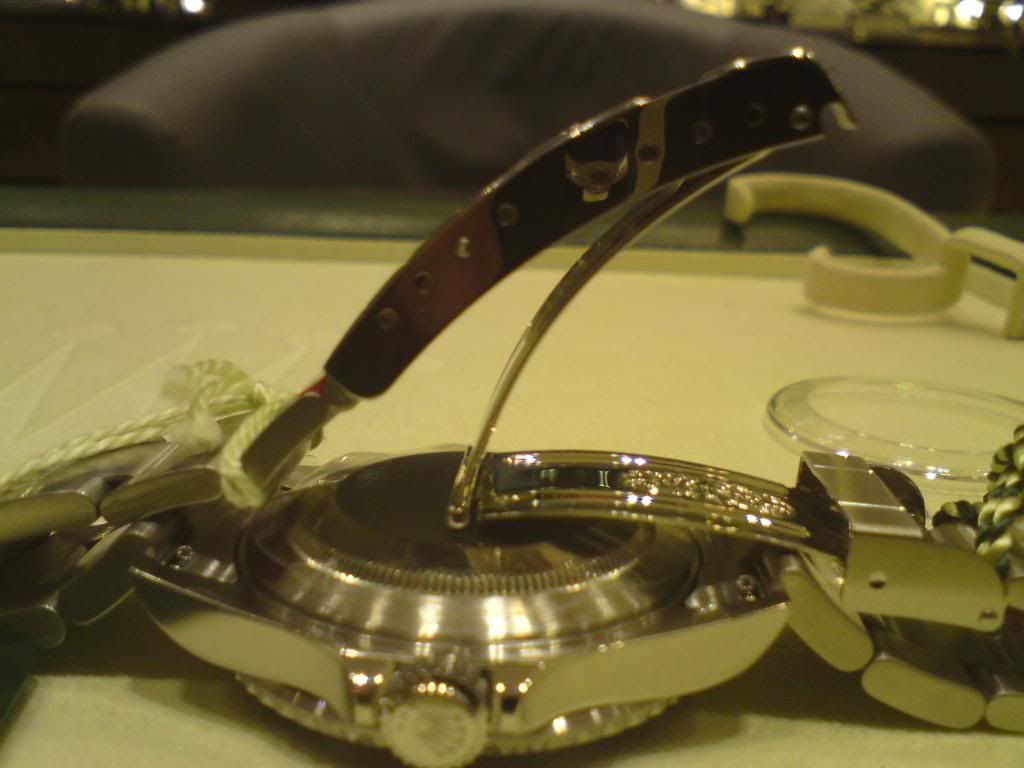
I certainly think that the clasp is the biggest drawback on the Submariner, especially in comparison to the Omega clasp:
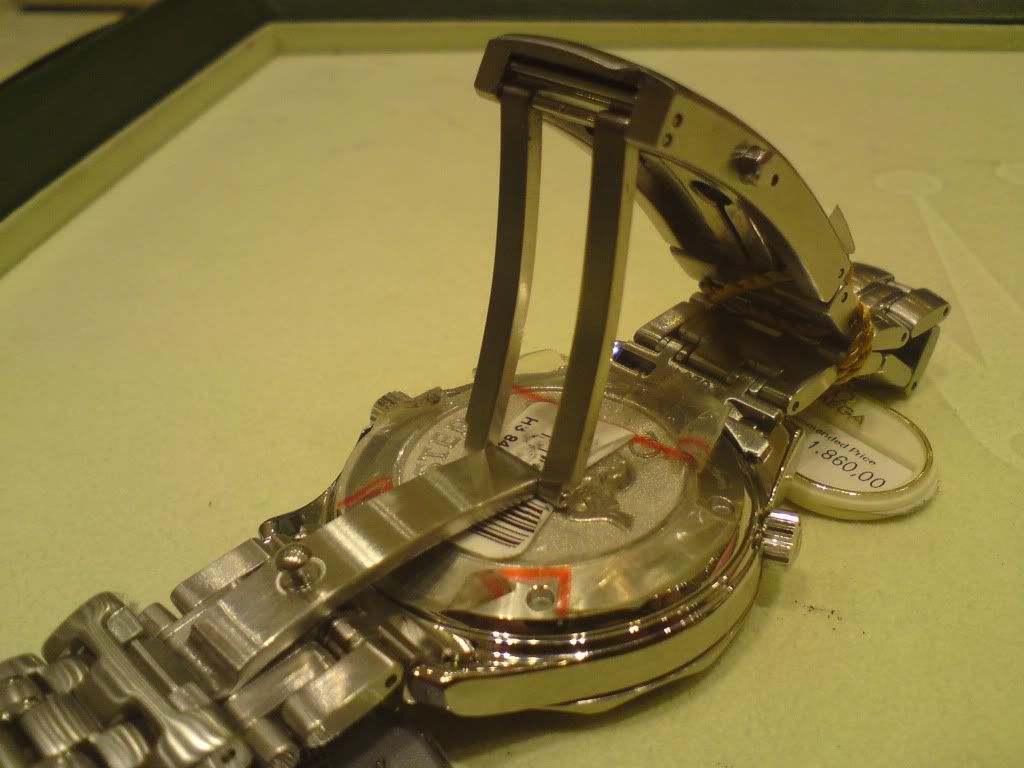
The Omega uses a push putton deployment clasp which won't have the same problems with the blades bending over time like the Submariner. It feels like a more heavy-duty clasp as well, and the quality of the engineering can't be faulted. Indeed, some argue that Omega's clasps sparked Rolex's drive for updating their own clasps. Omega wins convincingly here.
The Practicality
The Submariner has long been known as one of the best all-rounders out there - bash it around by day, and it'll still look perfect with a tuxedo. It truly is one of the watch world's greatest chameleons. The "James Bond" aspect has a lot to do with this, and applies to both watches - for someone who wants just one watch that can do everything, then the Sub or the SMP is a worthy choice. Neither are particularly chunky, so wearing one under a cuff isn't an issue. There's virtually nothing to distinguish between the two in this respect. A tie.
Value for Money
As I've asserted throughout the article, in many respects, the SMP is the equal of the Submariner, and in other respects, its superior. Indeed, the biggest difference between the two watches is the price, and I don't think this reflects the quality of the watches - the Submariner certainly isn't double the watch that the Seamaster is. It should also be noted that, due to the use of the Co-Axial escapement in the Seamaster, you get a 3 year guarantee on the Omega, as opposed to the 2 year on the Rolex. When buying new, there's also a bigger scope for discount on a Seamaster as well - most ADs will be unwilling to give more than a token discount on a Submariner owing to its continued popularity. Whilst buying new makes the Omega the rational choice, one also has to take into account resale value, and this is where the Rolex really comes into play. You can always rely on a steel sports Rolex to hold a substantial amount of its value, even a few years down the line. However, the depreciation on an Omega is brutal, and you'll struggle to sell it for muh more than half the RRP a year down the line. In some respects, you are paying extra for the Rolex marque, but it will help to give you a better return should you want to move on further down the line
However, it must be noted that an updated Submariner is expected to be launched in March 2010, hitting ADs in this country in around October/November. Whilst this might spark a small spike in demand for the 16610 as its phased out (in th same way there was a small hype for V-series Sea-Dwellers before the arrival of the Deep Sea), in the long term it will, in all likelihood, give second hand values of the 16610 a beatung. As such, the Submariner isn't quite the safe investment that it used to be.
Omega wins on value for money.
Conclusion
The Submariner 16610 has done the Rolex range proud for the past 20 years, and I'd argue that it's the pinnacle of 20th Century dive watches. The allure that it's created is simply phenomenal, and the fact that it's lasted such a long time pays a compliment to Rolex's overengineering at the time. However, its time has come to an end, and for the past few years, the Seamaster has been the sensible choice. I expect things will shift back into Rolex's favour come Basel 2010, and I can't wait for the rebirth of such an iconic watch.
If you asked me tomorrow which one to buy, I'd personally go for the Seamaster - it's quite possibly the best value luxury watch on the market. However, regardless of a rational approach, the Submariner does have the Rolex "magic," and that, for some, will be enough.
On a final note, if you want to get your hands on a new 16610, don't hang around - according to sources on TRF, Rolex USA has already run out of stock of them, and won't be getting any more steel Subs until the new model arrives. I don't know for certain whether this will be the case in the UK - as far as I'm aware, Rolex UK still has supplies in stock.
Thanks for reading
The GMT Master